Short answer: In 2026 you no longer need to bury a boundary wire. Three navigation technologies — RTK satellite positioning, AI vision, and LiDAR — now create virtual boundaries you draw once from a phone app. Our picks by yard size:
- Small lawn, under 0.25 acre, tight budget: Segway Navimow i105N (~$679) — the cheapest true wire-free mower worth owning.
- Small lawn with shade or tricky edges: ECOVACS Goat O1000 LiDAR PRO (~$1,000) — the 2026 value leader, LiDAR works where satellite signal drops.
- Medium lawn, 0.25–0.5 acre, lots of obstacles: Segway Navimow i208 LiDAR or eufy E18 — fast auto-mapping, strong obstacle avoidance.
- Large or steep lawn, 0.5 acre and up: Mammotion LUBA 3 AWD (~$2,239) — all-wheel drive, climbs an 80% slope rating, the category's heavy hitter.
- Under tree canopy where satellite struggles: Husqvarna Automower 410iQ EPOS (~$1,550) — satellite positioning tuned to hold accuracy under cover.
Prices are U.S. street prices as of June 2026 and move often; confirm before you buy.
Do robot lawn mowers really work without a perimeter wire?
Yes. The 2026 generation of robot mowers maps your lawn's boundaries using software, not buried cable. You plug in (or set down) the hardware, walk the perimeter once in the app or let the mower auto-map, and it learns the edges. Setup runs 20–60 minutes instead of a weekend of trenching.
One caution worth knowing before you shop: mowers built before roughly 2023 still relied on buried wire. Confirm the words "wire-free" or "no perimeter wire" in the product title, because older stock is still sold alongside the new models.
The three navigation systems, and why the best mowers combine them
Every wire-free mower leans on one or more of these:
- RTK (Real-Time Kinematic GPS). A fixed antenna corrects satellite signal to centimeter-level accuracy (roughly 2–3 cm). Precise on open lawns, but it wants a clear view of the sky — dense tree canopy softens it.
- AI vision. Onboard cameras tell grass from not-grass and spot obstacles. No antenna to install, close to plug-and-play, but it needs reasonable light.
- LiDAR. Laser pulses build a 3D map of the yard. It works in any light and under trees because it reads physical landmarks instead of signals — but it adds cost.
The strongest mowers layer two or three of these so one can cover for another when conditions change. Mammotion's LUBA 3, for example, fuses LiDAR, RTK, and vision; when the satellite signal weakens under a tree, LiDAR and cameras carry the load.
How to choose: three rules that matter more than the spec sheet
- Buy one tier above your actual lawn size. Manufacturer coverage numbers assume a flat, rectangular, obstacle-free lawn. Real yards — with beds, trees, and odd shapes — cut effective coverage by roughly 20–30%. Sizing up keeps the mower doing short, restful cycles instead of running flat out.
- Check both slope ratings. Many models list a working-area slope and a separate, lower boundary/perimeter slope, because turning at an edge needs more traction than mowing a straight line. If your yard is hilly, read both numbers, not just the headline.
- Accept that no mower edges perfectly. Edge-trimming systems — ECOVACS TruEdge, DREAME EdgeMaster 2.0, WORX Cut-to-Edge — get within about 2–3 cm of a solid border, but every model still leaves a thin uncut strip along walls and fences. Plan on a few minutes of hand-trimming, or a string trimmer, for a truly clean edge.
Also budget for connectivity: some mowers include 4G for remote control and GPS theft-tracking free for the first year only, then charge a subscription.
Best wire-free robot mowers by yard size (2026)
Small yards — under 0.25 acre
Segway Navimow i105N — best budget entry (~$679). A dual RTK + vision system: the antenna handles centimeter positioning outdoors, cameras handle close-up obstacles. Setup is 20–30 minutes — plug in the antenna, walk the perimeter once, done. Rated for about 1/8 acre (~5,445 sq ft), which fits most urban and inner-suburban lots. Against a lawn service at $50–65 per cut, 20–25 cuts a year, it pays for itself in well under a season.
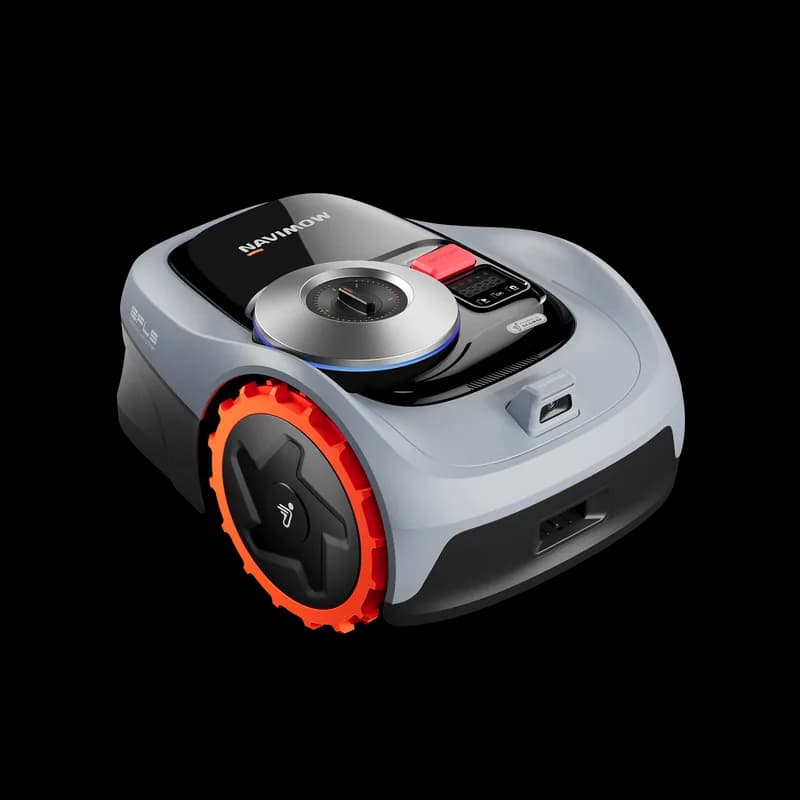
ECOVACS Goat O1000 LiDAR PRO — best value overall (~$1,000). This is the model that reset expectations in 2026 by bringing LiDAR under $1,000. LiDAR makes it the pick for shaded yards where RTK gets unreliable, and its built-in edge trimmer gets closer to borders than most. Best for lawns under a quarter acre; not for steep or large properties.
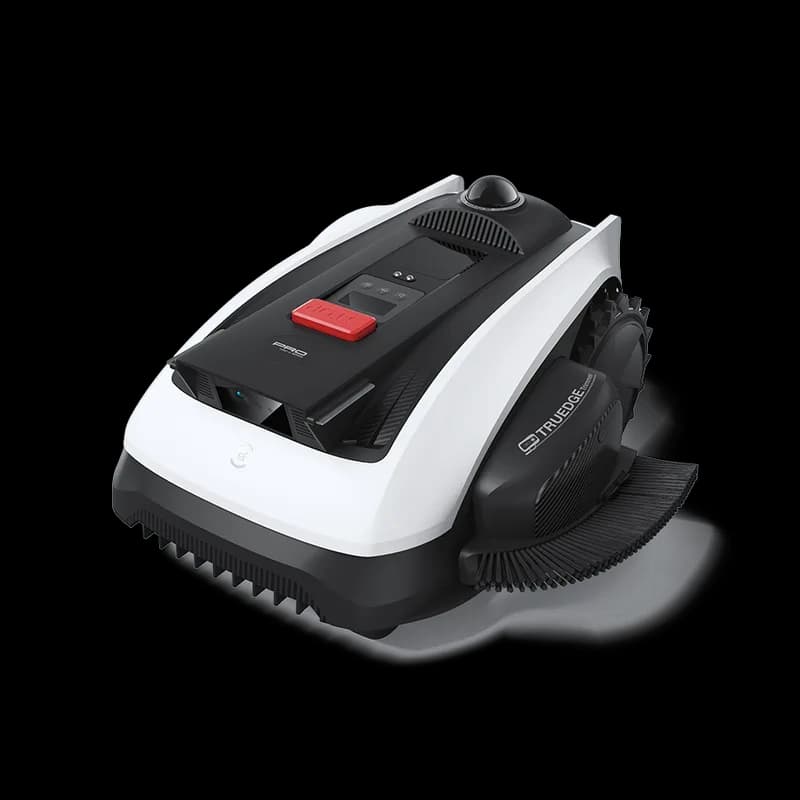
Mammotion YUKA Mini 700 — vision-first small-yard option. Rated around 0.17 acre and up to 0.35 acre, it pairs AI vision with RTK and auto-maps quickly. A good fit for smaller lawns where you want fast setup and don't need heavy slope capability.
Medium yards — 0.25 to 0.5 acre
Segway Navimow i208 LiDAR — easiest setup for busy, obstacle-heavy lawns. LiDAR plus AI-assisted cameras that recognize 200+ objects, with very fast auto-mapping and a polished app. It shines on flat gardens full of obstructions; on rough or steep terrain, step up to an all-wheel-drive model.
eufy E18 — RTK-free convenience at scale. Built for lawns up to 1,200 m², it uses AI visual navigation with no antenna and no buried wire — set the stakes, power on, and let it learn contours and slopes. Adjustable cutting height and an anti-theft alarm round it out. A strong choice for medium lawns where you want the simplest possible setup.
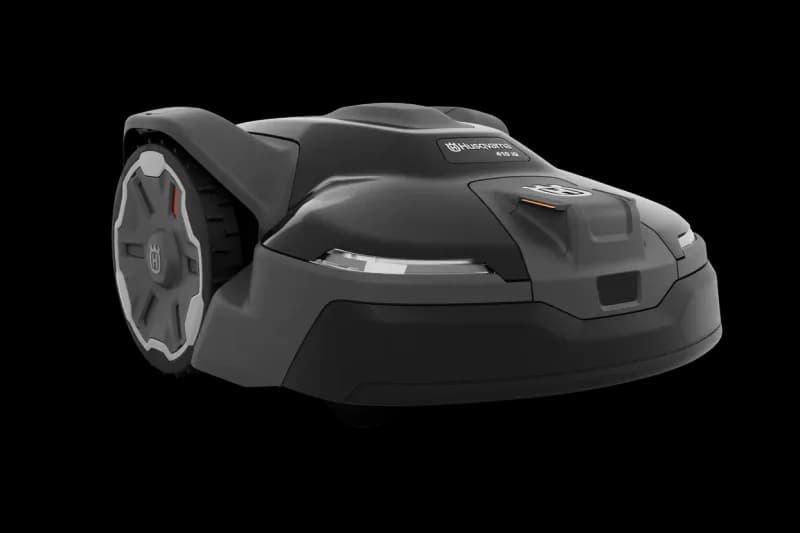
Husqvarna Automower 410iQ EPOS — the under-canopy specialist (~$1,550). Husqvarna's EPOS satellite system is tuned to hold accuracy under tree cover where plain RTK falters. Covers about 0.5 acre at a 45% slope rating, with deep smart-home integration (Alexa, Google Home, IFTTT). Premium, but the pick if your lot is wooded.
Large or steep yards — 0.5 acre and up
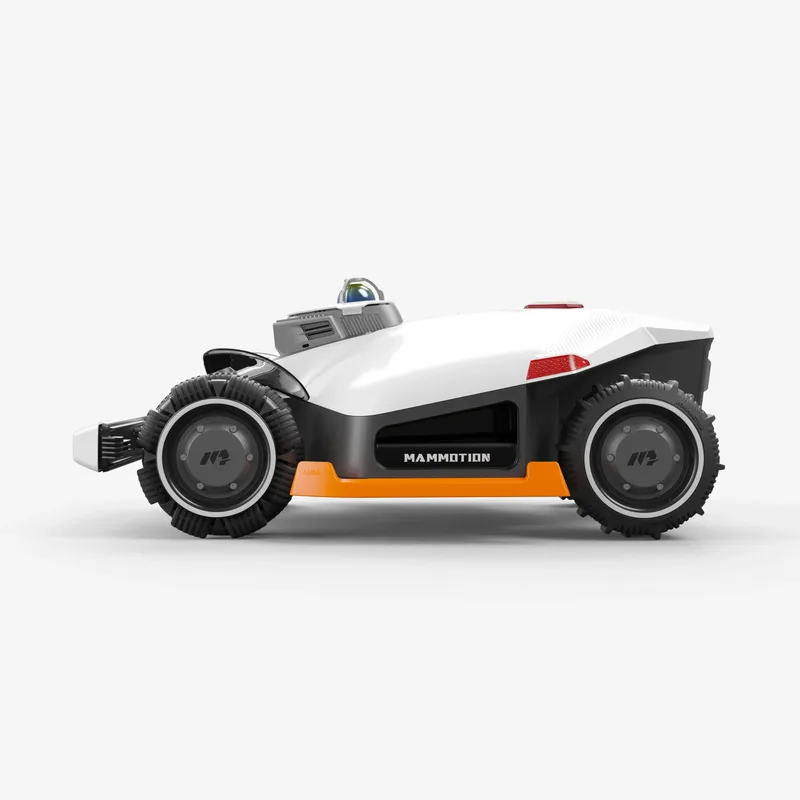
Mammotion LUBA 3 AWD 3000H — the category's heavy hitter (~$2,239). All-wheel drive climbs an 80% slope rating, the steepest here, for terraced and hilly lots. Tri-fusion navigation layers LiDAR, RTK, and vision so it recovers when one signal drops, covering roughly 0.75 acre wire-free with up to 30 editable zones. The honest catch is price — it asks flagship money, and you're paying for coverage and slope, not value per square foot.
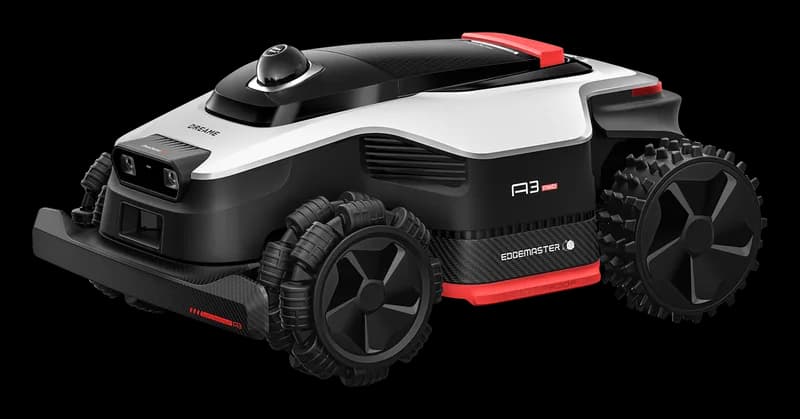
DREAME A3 AWD Pro — the premium newcomer. One of 2026's most advanced new entries: AWD traction with LiDAR and binocular AI vision, and EdgeMaster 2.0 for unusually close edge cutting. A real alternative to Mammotion for buyers who want premium performance without relying entirely on RTK.
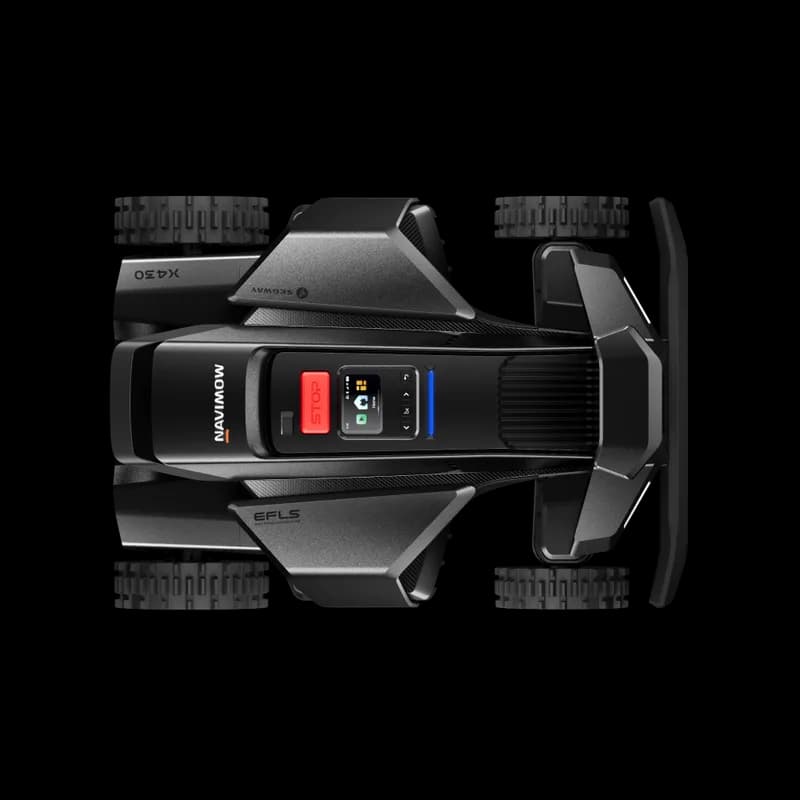
Segway Navimow X430 — largest coverage. For lots stretching toward 1.5 acres, Segway's X4 line (including the X450) brings AWD and high slope capability. Overkill for a typical suburban yard, but the option when acreage is the constraint.
Free checklist
Get the Robot Mower Buyer's Checklist (PDF)
Everything in this guide, condensed into a one-page checklist you can take shopping.
Brands to watch: the challengers making wire-free affordable
Beyond the household names, a wave of smaller, hungrier brands is pushing hard on price and features — often the best value if you're willing to go with a newer name:
- ANTHBOT Genie 3000 — handles large, complex yards up to 0.89 acre (3,600 m²) with RTK plus 4-Eye Vision and up to 30 zones.
- Sunseeker V3 / Elite X5 — the V3 is a budget vision-AI option for moderate slopes; the Elite X5 merges VSLAM visual mapping with RTK for near-100% navigation uptime in wooded yards.
- Gardena SILENO free — 2026 AI mapping, notably quiet at 57–58 dB, optimized for flat residential lawns and noise-sensitive neighborhoods.
We track these closely because a great product from a smaller brand — one that ships from a U.S. warehouse and stands behind its returns — is exactly the kind of thing we'd want to vet and list.
Frequently asked questions
How long does a robot mower take to cut my lawn? Most run 60–90 minutes, then dock, recharge, and resume automatically. A quarter-acre lawn can take a full day across several charge-and-mow cycles. That's by design — mowers "micro-mow" a little each day, which produces a finer, healthier cut than one big weekly session.
Are robot mowers worth it? For lawns over a quarter acre, a robot mower saves roughly 30–65 hours of mowing per season. Running costs ($50–100/year) sit well below a gas mower's ($150–400), so most models pay for themselves in about 3–4 seasons — sooner if you're replacing a paid lawn service.
Can they handle slopes? Most manage 35–45% grades, which covers typical suburban yards. All-wheel-drive models (Mammotion LUBA 3, DREAME A3 AWD Pro, Segway X-series) reach 80%+. Always check both the working-area and perimeter slope ratings.
I rent. Can I use one? Yes — wire-free models are ideal for renters precisely because there's nothing to bury or repair. Set the virtual boundary in the app and take the mower with you when you move.
When is a robot mower the wrong buy? Under about 2,000 sq ft, the payback is too slow — a corded electric or push reel mower handles that in 15 minutes for under $200. And grades steeper than the ~80% the top AWD models clear need a manned riding mower.
How we evaluate
Picked by Ordis is a curated shop and independent guide for AI and smart-home gear built for the U.S. market. We weigh the things that actually decide whether a mower is worth owning — navigation tech and real-world coverage, slope capability, edge performance, setup friction, noise, and long-term reliability — over marketing claims. For U.S. buyers we pay particular attention to domestic warehousing and honest return policies, because in the post-de-minimis landscape a device that ships from a U.S. warehouse with real support is worth more than a cheaper one stuck in customs.
This is an independent buyer's guide. When a product carries our "Vetted by Ordis" seal, it has met three specific checks — U.S. warehouse / domestic shipping, FCC compliance where applicable, and the seller's own return policy of at least 30 days. Nothing in this guide is claimed as vetted unless it shows that seal; the seal is reserved for products we've confirmed, not assumed.
Last updated June 2026. Prices and model availability change quickly in this category — always confirm current specs and stock before purchasing.