
An AI pet feeder or camera is worth buying if your pet needs scheduled feeding or monitoring while you're away and you want reliable live-video access from your phone. The features that matter most — app reliability, Wi-Fi compatibility, and a real return policy — are rarely the ones on the front of the box.
What does "AI" actually mean in pet tech?
The word "AI" on a pet feeder or camera box typically means one of three things, in ascending order of usefulness:
Scheduled automation. The device follows a feeding schedule you set in an app. This is basic programming, not machine learning — but it works, and it's what most owners actually need.
Motion detection and alerts. A camera uses on-device processing to flag movement and send a phone notification. True AI here means fewer false alerts (the camera learns to distinguish your pet from a shadow); basic processing means your phone buzzes every time a leaf blows past the window.
Portion-control vision. A small number of premium feeders use a camera to confirm whether the bowl is empty before releasing another portion — useful in multi-pet households where one animal tends to finish another's food.
Knowing which "AI" a device actually offers lets you pay for what you need instead of a marketing tier.
What to look for before you buy
App ecosystem. The hardware is only as good as the software running it. Check: Is the app available on both iOS and Android? When was it last updated in the App Store or Google Play? Do reviews mention dropped connections or broken schedules after a firmware update? A smart feeder tied to an abandoned app is just an expensive gravity feeder.
Wi-Fi band: 2.4 GHz vs. 5 GHz. Most pet feeders and cameras connect on 2.4 GHz only. If your router broadcasts 2.4 GHz and 5 GHz under the same network name, the device may fail to connect. Either split them in your router settings or confirm the device's required band before ordering.
Camera resolution and field of view. For a pet camera, 1080p at 110–130° field of view covers most living rooms adequately. Night vision (infrared) matters if the room is dim when you're away. Two-way audio — speaking through the app to your pet — is a separate feature; not all cameras include it, and not all pets respond to it.
Treat dispenser mechanism. Motorized dispensers can jam with certain treat sizes or shapes. Check the manufacturer's recommended treat dimensions and confirm the mechanism can handle the brand you already buy.
Power source. Most feeders and cameras require a constant power connection. Battery-only models offer placement flexibility but typically have shorter scheduled feeding windows and higher failure risk during extended trips.
FCC certification for connected pet devices
Any pet feeder or camera with Wi-Fi or Bluetooth must carry FCC certification for legal sale in the United States. The FCC ID should appear printed on the device itself or clearly listed in the product description. If it doesn't, the device may not be authorized for U.S. use — and it's more likely to interfere with your home network or neighboring devices.
Verification takes 60 seconds: find the FCC ID on the product page or device label and search it at fcc.gov/oet/ea/fccid. If the ID returns no results, proceed with caution.
For a full explanation of what FCC certification means and which devices require it, see our FCC certification guide.
U.S. warehouse and domestic shipping
Pet feeders and cameras are bulky relative to their price. Shipping from overseas warehouses adds 2–4 weeks in transit and makes returns expensive in practice — a return label to an overseas address can cost more than the item is worth. What you are looking for is a product that ships from a U.S. warehouse: it should reach you in days rather than weeks, and a return should only require a domestic label.
When comparing products on your own, confirm: Is there a U.S. warehouse address listed? Does the product page state domestic shipping explicitly?
Return policy: what 30+ days really means
A pet feeder or camera needs time to prove itself. You need at least a week to run a feeding schedule and confirm the app connects reliably. Another week to observe how your pet interacts with it. Thirty days gives you enough real-world use to make an honest decision.
A return window shorter than 30 days — or one that requires return shipping to an overseas address at your cost — effectively means no return policy at all. A seller worth buying from will back a 30-day return without conditions — that is the bar to hold any of them to.
Common first-buyer mistakes
Buying on feature count. A feeder with 12 scheduled feeding slots and a dual-camera system is less useful than one with a stable app and a proven dispenser mechanism. Start with what you need, not the top-of-line spec sheet.
Ignoring app store reviews. Hardware issues surface in retail reviews. Software issues — broken schedules, dropped connections, failed firmware updates — surface in App Store and Google Play reviews. Read both before you buy.
Not testing the connection before you travel. Set up the device and run it for 48 hours before your first trip. Confirm the app shows live video, the schedule fires at the right times, and notifications arrive. Discovering a Wi-Fi issue from another time zone is entirely avoidable.
Assuming "smart" means reliable. A motorized feeder has more failure points than a gravity feeder. Until you've run it through at least two full feeding cycles, have a backup plan — a neighbor with a key, or a simple gravity feeder as fallback.
Our picks
We checked each of these against the app, Wi-Fi, and return-policy questions above, plus each maker's own product pages. Grouped by what you actually need, not by price.
Single-pet feeding — camera included
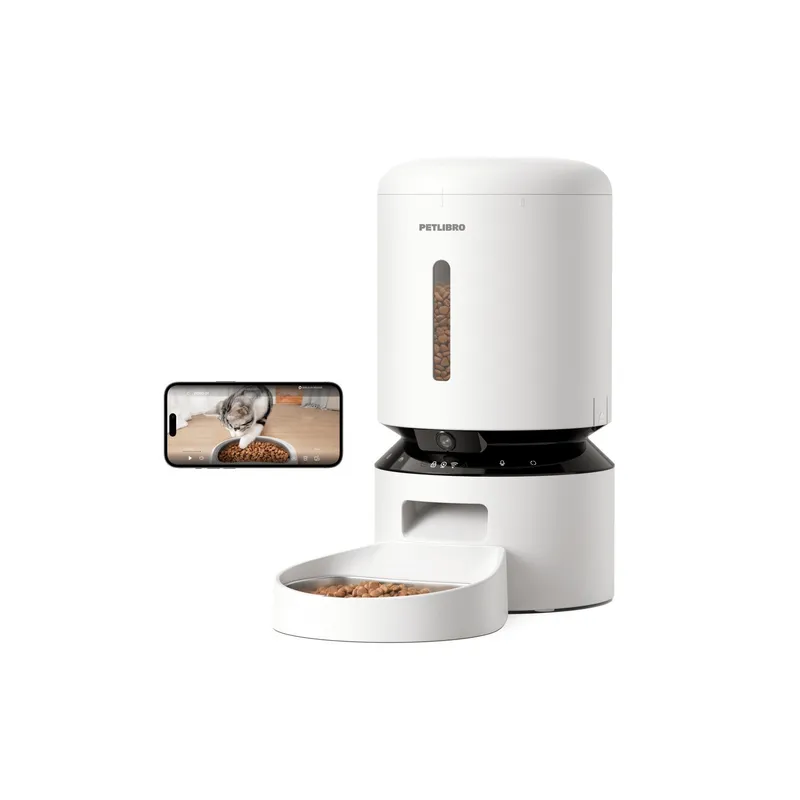
PETLIBRO Granary Smart Camera Feeder — best if you're feeding one pet and want eyes on the bowl. A built-in 1080p HD camera with infrared night vision lets you check on mealtime from your phone, the app sends a notification for every scheduled feeding, and schedules are fully personalized to your pet's diet. Single bowl — feeds one pet; a second pet has no tray of its own.
Multi-pet households
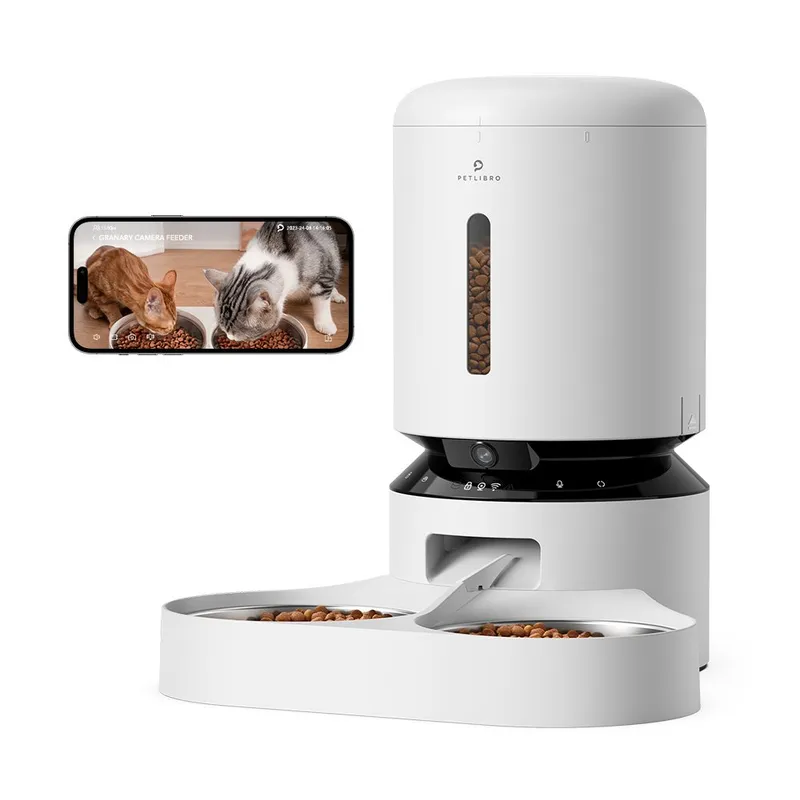
PETLIBRO Granary Camera Feeder for Two Cats — the same 1080p camera and night vision as the single-tray Granary, but with a dual bowl so two pets get separate, independently scheduled portions from one feeder. Two bowls, no more — a third pet in the house still needs its own feeder.
Monitoring only — no feeder
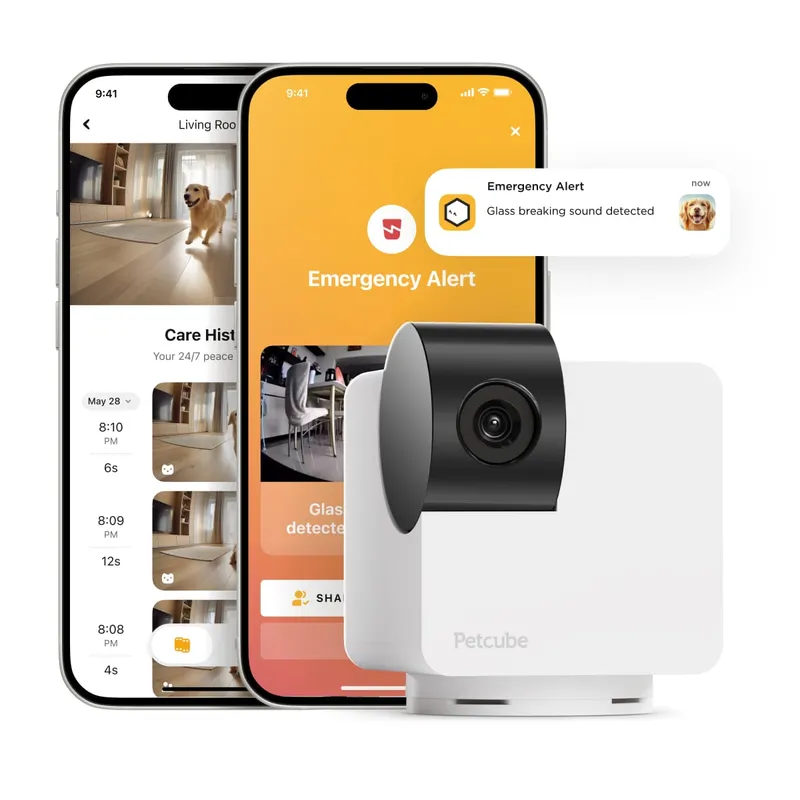
Petcube Cam 360 — no feeding mechanism, just a 360° pan-tilt camera built for watching, not dispensing: 1080p HD with a 105° wide-angle lens, two-way audio with Alexa integration, and night vision visible up to 30 feet. Extended video history and 24/7 vet chat require the paid Petcube Care subscription — the free tier is live view and real-time alerts only.
Frequently asked questions
Does 2.4GHz vs. 5GHz Wi-Fi actually matter for a pet feeder or camera? Yes. Most pet feeders and cameras connect on 2.4 GHz only. If your router broadcasts 2.4 GHz and 5 GHz under the same network name, the device may fail to connect. Either split them in your router settings or confirm the device's required band before ordering.
How do I check if a pet camera or feeder is FCC certified? Find the FCC ID printed on the device or listed in the product description, then search it at fcc.gov/oet/ea/fccid — it takes about 60 seconds. If the ID returns no results, proceed with caution.
What does a real 30-day return policy actually need to cover? Enough real-world use to make an honest call: at least a week to run a feeding schedule and confirm the app connects reliably, and another week to see how your pet responds to it. A window shorter than 30 days — or one that requires return shipping to an overseas address at your cost — effectively means no return policy at all.
Does the Petcube Cam 360 work without a subscription? Yes — the free tier gives you live view and real-time alerts. The paid Petcube Care subscription adds multi-day video history and 24/7 vet chat on top of that.
Can the PETLIBRO dual-bowl feeder handle more than two pets? No — it's built with exactly two bowls, each independently scheduled. A third pet in the house still needs its own feeder or bowl.
How we evaluate
Picked by Ordis is a curated shop and independent guide for AI and smart-home gear built for the U.S. market. We weigh the things that actually decide whether a pet feeder or camera is worth owning — app reliability, camera resolution and night vision, Wi-Fi band compatibility, and the treat- or portion-dispensing mechanism's real-world reliability — over marketing claims. For U.S. buyers we pay particular attention to domestic warehousing and honest return policies, because in the post-de-minimis landscape a device that ships from a U.S. warehouse with real support is worth more than a cheaper one stuck in customs.
This is an independent buyer's guide. When a product carries our "Vetted by Ordis" seal, it has met three specific checks — U.S. warehouse / domestic shipping, FCC compliance where applicable, and the seller's own return policy of at least 30 days. Nothing in this guide is claimed as vetted unless it shows that seal; the seal is reserved for products we've confirmed, not assumed.